


Introduction
Artificial intelligence continues to redefine the landscape of technology in 2025, pushing the boundaries of what machines can accomplish independently. Two recent developments stand out for their technical ambition and potential industry impact: Amazon Web Services (AWS) introducing “frontier agents” capable of coding autonomously for days, and Europe’s Mistral AI launching Mistral 3, a family of open-source models designed for edge devices and cloud environments alike. Together, these innovations represent a significant leap toward fully automated software development and versatile AI deployment.
Amazon’s Frontier Agents: Autonomous Software Development Takes a Leap
At the AWS re:Invent 2025 keynote, CEO Matt Garman unveiled “frontier agents,” a new class of AI systems engineered to autonomously handle complex software development tasks over extended periods—ranging from hours to days—without human intervention. This is a remarkable technical feat, as it moves beyond current AI tools that require frequent human guidance or supervision.
Amazon’s approach involves specialized AI agents that function as virtual team members in a software development lifecycle. These agents can generate, test, debug, and optimize code continuously, simulating a collaborative development environment. The system leverages advanced reinforcement learning and large language models fine-tuned for programming tasks, integrating with AWS cloud infrastructure to scale resources dynamically based on workload.
Technically, frontier agents combine:
- Long-context reasoning: Ability to maintain codebase context over days.
- Self-supervised debugging loops: Iteratively test and refine code autonomously.
- Cloud integration: Seamless deployment and scaling on AWS.
This advancement could revolutionize how software engineers work, shifting their role from hands-on coding to oversight and strategic decision-making. However, it also raises questions about workforce dynamics and the ethics of AI autonomy in critical software projects.
Read more at VentureBeat.
Mistral 3: Open-Source AI Models for Edge and Cloud
In parallel with Amazon’s cloud-centric AI leap, Mistral AI is making waves in Europe by releasing Mistral 3, a family of 10 open-source AI models optimized to run efficiently across a wide range of devices—from laptops and drones to enterprise clouds. This represents a strategic escalation in democratizing AI capabilities beyond centralized, resource-heavy environments.
The Mistral 3 lineup includes:
- Mistral Large 3: A flagship model with state-of-the-art natural language processing capabilities.
- Minis: Smaller, lightweight models designed for resource-constrained devices like autonomous drones and smartphones.
The technical innovation lies in achieving a balance between model size, computational efficiency, and performance. Mistral achieves this through novel compression techniques, efficient transformer architectures, and hardware-aware optimizations that allow real-time inference on edge devices without sacrificing accuracy.
By open-sourcing these models, Mistral fosters transparency and accelerates AI adoption in sectors where data privacy and latency are critical, such as healthcare, manufacturing, and autonomous systems.
Explore the details at VentureBeat.
Other Noteworthy Tech Stories in 2025
While AI captures headlines, other innovations continue to enhance user experience and productivity:
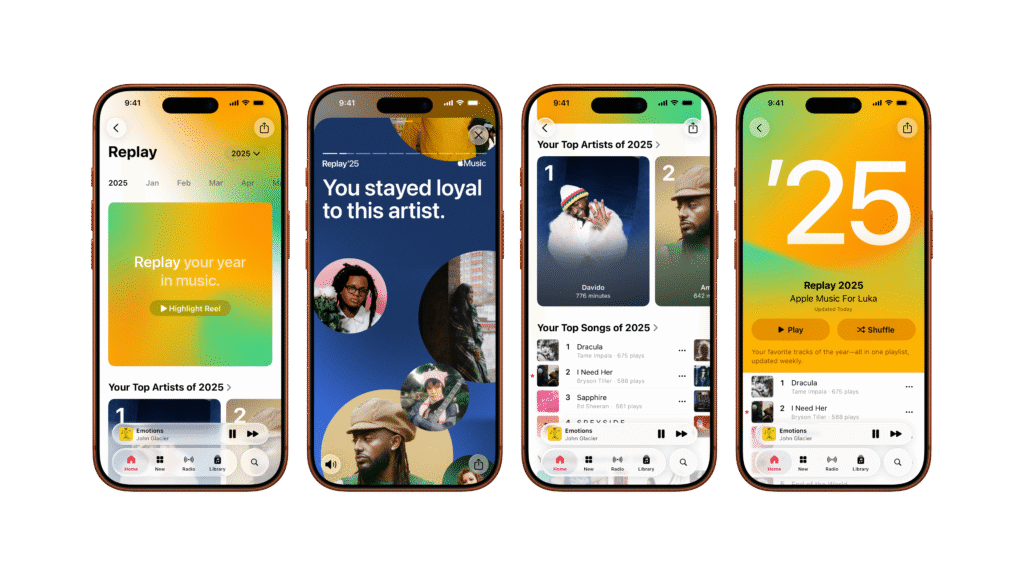
- Apple Music Replay 2025: Apple’s yearly listening recap now integrates deeper analytics to track new artists and listening habits directly within the app, challenging Spotify Wrapped’s dominance (The Verge).
- Anker Nano Docking Station: A 13-in-1 desktop dock with a detachable USB-C hub blends portability with connectivity, catering to remote workers and digital nomads (The Verge).
- Nintendo Switch 2 Deals Persist: Despite Cyber Monday ending, Walmart continues to offer discounts on the Switch 2 + Mario Kart bundle, highlighting sustained consumer demand for gaming hardware (The Verge).
Quick Hits
- Amazon has blocked ChatGPT’s shopping bots, requiring users to shop directly on its platform (ZDNet).
- Ascentra Labs secured $2 million to use AI for automating consulting workflows, replacing manual Excel tasks (VentureBeat).
- Cyber Monday Chromebook deals linger, offering budget-friendly tech options as the shopping season winds down (ZDNet).
Trend Analysis: AI Autonomy and Edge Democratization
The convergence of Amazon’s frontier agents and Mistral’s open models highlights two critical trends shaping AI in 2025:
- Autonomous AI Workflows: With frontier agents capable of sustained coding efforts, the industry is moving toward AI systems that can independently manage complex, multi-step projects. This reduces reliance on human programmers for routine or iterative development tasks, potentially increasing efficiency but also raising governance and reliability concerns.
- Edge AI Democratization: Mistral 3’s focus on models optimized for edge devices signals a shift from centralized AI services to distributed intelligence. This enables privacy-preserving, low-latency applications across industries and geographical regions that cannot always rely on robust cloud connectivity.
These trends may complement each other as autonomous AI agents could eventually be deployed not only in cloud environments but also closer to where data is generated, enhancing responsiveness and reducing infrastructure costs.
Conclusion: What’s Next for AI and Automation?
Amazon’s breakthrough in autonomous coding and Mistral’s push for versatile, open AI models underscore a future where artificial intelligence becomes both more independent and more accessible. As AI systems increasingly shoulder the burden of complex tasks, questions about trust, control, and human collaboration come to the forefront.
Will software engineers become AI supervisors rather than creators? Can open-source edge AI spur innovation in underserved markets? As these technologies evolve, stakeholders must balance innovation with responsibility.
How do you envision the role of AI agents evolving in your industry over the next five years?


Leave a Reply