


Introduction
As 2025 barrels forward, the tech landscape continues to be shaped by rapid AI advancements, fierce regulatory scrutiny, and critical security challenges. This roundup covers some of the most compelling stories recently making waves—from Google’s urgent AI infrastructure expansion and legal battles over ad monopolies, to the unsettling leak of Jeffrey Epstein’s emails and alarming cybersecurity breaches. Whether you’re tracking AI innovation, data privacy, or tech market dynamics, these developments offer a revealing snapshot of where technology stands today and where it’s heading tomorrow.
Jeffrey Epstein’s Emails Resurface in a Unique Inbox Format
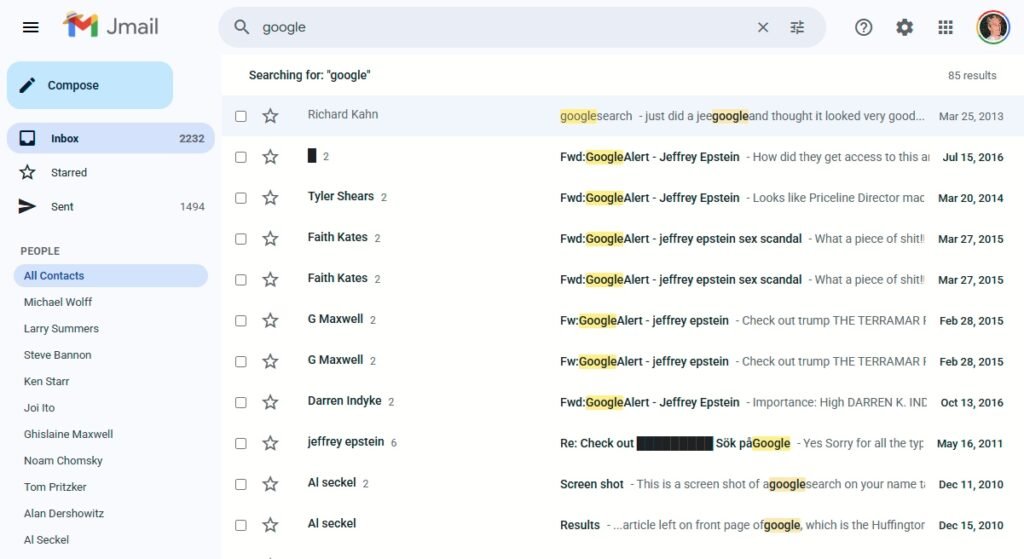
Earlier this month, the House Oversight Committee released over 20,000 pages of emails linked to convicted sex offender Jeffrey Epstein, reigniting investigations into his network, including high-profile figures like former Harvard president and OpenAI board member Larry Summers. Developers Luke Igel and Riley Walz have transformed this trove into a searchable inbox dubbed ‘Jmail’, mimicking Gmail’s interface but containing Epstein’s emails. This innovative reformatting not only increases public accessibility but also highlights the evolving role of tech in uncovering complex social and political webs.
Google Pushes Back Against AI Training Email Claims
Concerns over privacy and data usage continue to dominate conversations around AI. Viral posts suggested that Google’s Gmail uses user emails and attachments to train its AI models, with opt-out options tied to disabling “smart features.” However, Google spokesperson Jenny Thomson clarified that Google does not use Gmail content to train AI unless users explicitly opt in by enabling smart features. This clarification, reported by The Verge, underscores the importance of transparent data policies as AI integration deepens across consumer services.
Judge Considers Breaking Up Google’s Ad Tech Monopoly
Google faces intense legal scrutiny over its dominance in digital advertising technology. In a pivotal moment reported by The Verge, Judge Leonie Brinkema is weighing whether to order the breakup of Google’s ad tech empire to restore competition. With a decision expected next year, the case highlights the growing regulatory pushback against Big Tech’s monopolistic control and signals potential seismic shifts in how digital advertising operates globally.
Google’s AI Infrastructure Must Double Every Six Months
Amid skyrocketing demand for AI services, Google’s AI infrastructure chief has informed employees that the company must double its capacity every six months to keep pace. According to Ars Technica, Google aims for a thousandfold increase over five years—a staggering scale-up that reflects the unprecedented appetite for AI-powered tools and platforms. This push will have significant implications for energy consumption, hardware innovation, and cloud computing economics.
Cybersecurity Warnings: Asus Routers Hacked by State-Sponsored Actors
Security experts have uncovered widespread compromises of Asus routers, with thousands reportedly under the control of suspected China-state hackers, as detailed by Ars Technica. While attackers are currently lying low, the breach poses a looming threat for future cyber operations, emphasizing the critical need for robust device security and firmware updates in the IoT era.
OpenAI to Retire GPT-4o API Access in Early 2026
OpenAI has announced it will retire API access to its popular GPT-4o model on February 16, 2026, giving developers a transition period to migrate their applications. Importantly, GPT-4o will remain accessible in ChatGPT itself, maintaining availability for end users. This move, reported by VentureBeat, signals OpenAI’s evolving product strategy as it balances innovation with platform stability and scalability.
Quick Hits
- Xbox Full Screen Experience Expands: Microsoft’s console-like UI for gaming libraries is now available on all Windows PCs, laptops, and tablets, enhancing controller navigation beyond handhelds. (The Verge)
- Early Black Friday Robot Vacuum Deals: Discounts up to $1,300 on Roborock and Eufy models offer relief for holiday cleaning stress. (The Verge)
- Cryptographers Lose Election Decryption Key: A voting system’s election results were canceled after one of three required keys was lost, raising concerns over cryptographic safeguards. (Ars Technica)
Trend Analysis: The Interplay of AI Growth, Privacy, and Regulation
The stories above underscore a defining tension in 2025’s tech ecosystem: the rapid expansion of AI capabilities versus mounting concerns over privacy, security, and market control. Google’s aggressive AI infrastructure scaling aligns with soaring consumer and enterprise demand, yet it also triggers scrutiny over data use and monopolistic practices. Meanwhile, security breaches and leaked data remain a sobering reminder that technological progress must be matched with vigilance and transparency.
OpenAI’s API retirement strategy suggests a maturing AI marketplace where models evolve, and developers must adapt quickly. At the same time, courtrooms and regulatory bodies worldwide are increasingly willing to challenge Big Tech dominance to preserve competitive ecosystems and protect user interests.
In this dynamic environment, the role of innovative legal frameworks, ethical AI development, and robust cybersecurity will be crucial. As consumers and professionals, staying informed about these developments empowers us to navigate a future where technology’s benefits are maximized while minimizing risks.
Conclusion
From Epstein’s emails surfacing in novel digital formats to Google’s AI ambitions and ongoing legal battles, 2025 is shaping up to be a pivotal year for technology. The balance between innovation, privacy, and regulation has never been more delicate. How will society ensure that AI and automation continue to serve humanity’s best interests without compromising security or fairness? As these stories unfold, the answers may define the next decade of technological progress.
What steps do you think are necessary to create a sustainable, ethical future for AI and tech innovation?
Leave a Reply